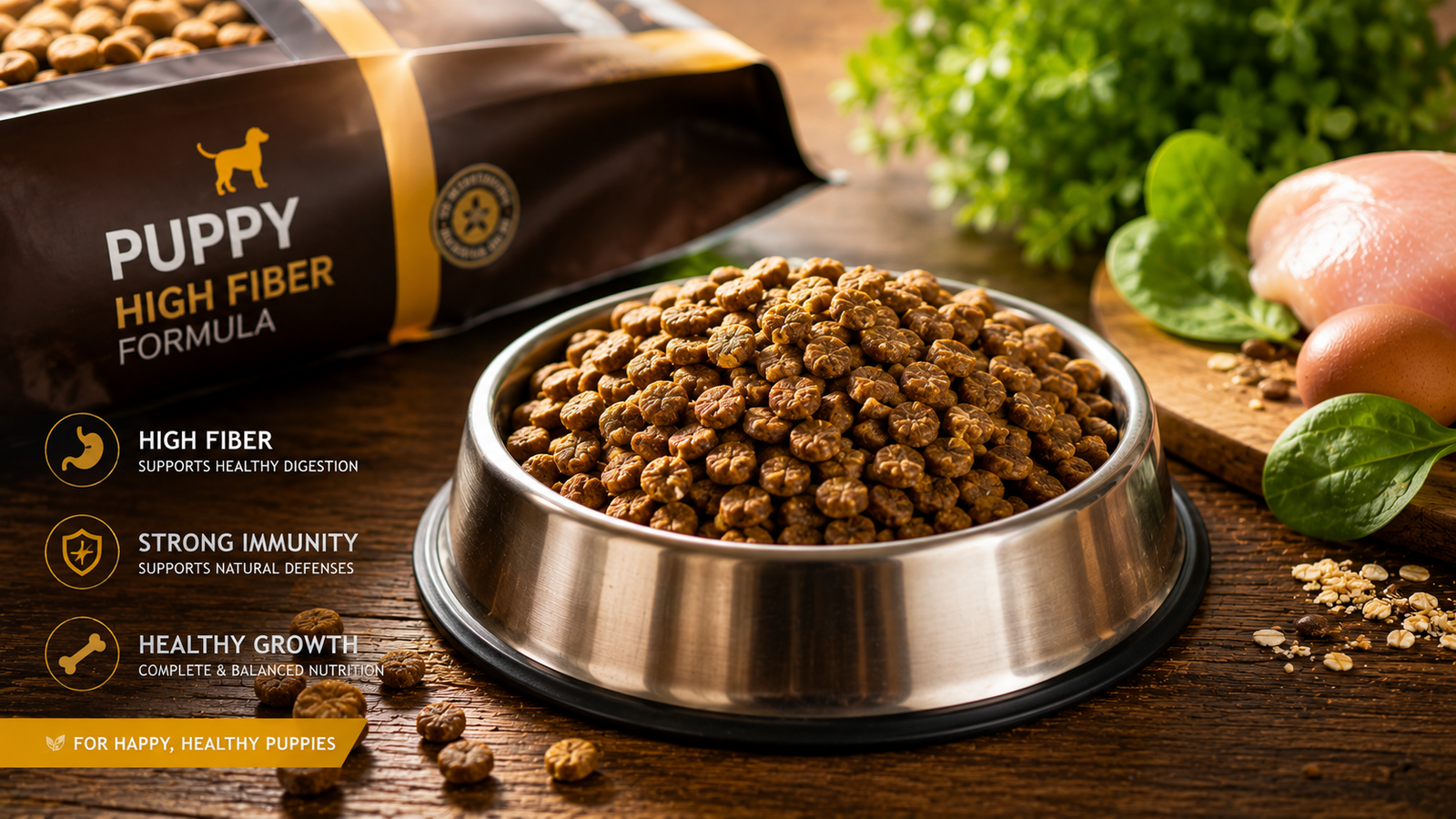
Bringing home a puppy is exciting. It is also a little chaotic. One minute your puppy is chasing a toy, and the next minute they are trying to eat a sock.
During this fast-growing stage, nutrition plays a huge role in your puppy’s development. Most pet parents focus on protein and healthy fats, but fiber deserves attention too. The right amount of fiber can support digestion, improve stool quality, and help maintain a healthy gut.
However, more fiber does not always mean better health. Puppies have different nutritional needs than adult dogs, so choosing the right high fiber puppy food requires careful planning.
In this guide, you will learn what high fiber puppy food is, why it matters, which ingredients provide healthy fiber, and how to choose the best option for your growing companion.
What Is High Fiber Puppy Food?

High fiber puppy food contains a higher amount of dietary fiber than standard puppy diets.
Fiber is a type of carbohydrate that the body cannot fully digest. Instead of providing energy like fats or proteins, fiber helps support digestive health and healthy bowel movements.
Veterinary nutrition experts generally classify dog foods with higher dietary fiber levels as high-fiber diets. Fiber can come from vegetables, fruits, grains, legumes, and specially added prebiotic ingredients.
For puppies, fiber should support growth rather than replace important nutrients. A puppy’s diet must still provide enough protein, fat, vitamins, and minerals to support healthy development. According to AAFCO guidelines, growth-stage diets should provide complete and balanced nutrition specifically formulated for puppies.
Why Fiber Matters for Puppies
Many people think fiber only helps with constipation. In reality, it does much more.
Fiber supports healthy digestion by helping food move through the digestive tract. It can also help regulate stool consistency, making loose stools firmer and hard stools easier to pass.
A healthy gut matters even more for puppies because their digestive systems are still developing.
Research has shown that certain prebiotic fiber blends may support gastrointestinal health in growing puppies while allowing normal growth and development.
Some benefits of appropriate fiber intake include:
- Better stool quality
- Improved digestive regularity
- Support for beneficial gut bacteria
- Reduced digestive upset
- Support for overall gut health
Think of fiber as the maintenance crew working behind the scenes. It may not get the spotlight like protein, but it helps keep everything running smoothly.
Types of Fiber Found in Puppy Food
Not all fiber works the same way.
Understanding the different types helps you choose better high fiber puppy food.
Soluble Fiber
Soluble fiber absorbs water and forms a gel-like substance in the digestive tract.
This type of fiber can help support beneficial gut bacteria and may improve stool consistency.
Common sources include:
- Pumpkin
- Sweet potatoes
- Oats
- Apples
- Certain legumes
Insoluble Fiber
Insoluble fiber adds bulk to stool and helps food move through the digestive system.
Common sources include:
- Brown rice
- Vegetable fibers
- Some grains
- Carrots
Most quality puppy foods contain a combination of both fiber types because they perform different functions.
Signs Your Puppy May Benefit From More Fiber
Every puppy is different.
Some puppies thrive on standard diets, while others may benefit from slightly higher fiber content.
Possible signs include:
- Frequent loose stools
- Mild constipation
- Irregular bowel movements
- Sensitive digestion
- Poor stool consistency
However, digestive issues can have many causes. Before changing your puppy’s diet, consult your veterinarian to rule out parasites, infections, food sensitivities, or other health concerns.
A food change should solve a nutritional issue, not accidentally hide a medical problem.
Best Fiber Sources in Puppy Food
When reading ingredient labels, focus on quality fiber sources rather than chasing the highest fiber percentage.
Several ingredients provide fiber along with valuable nutrients.
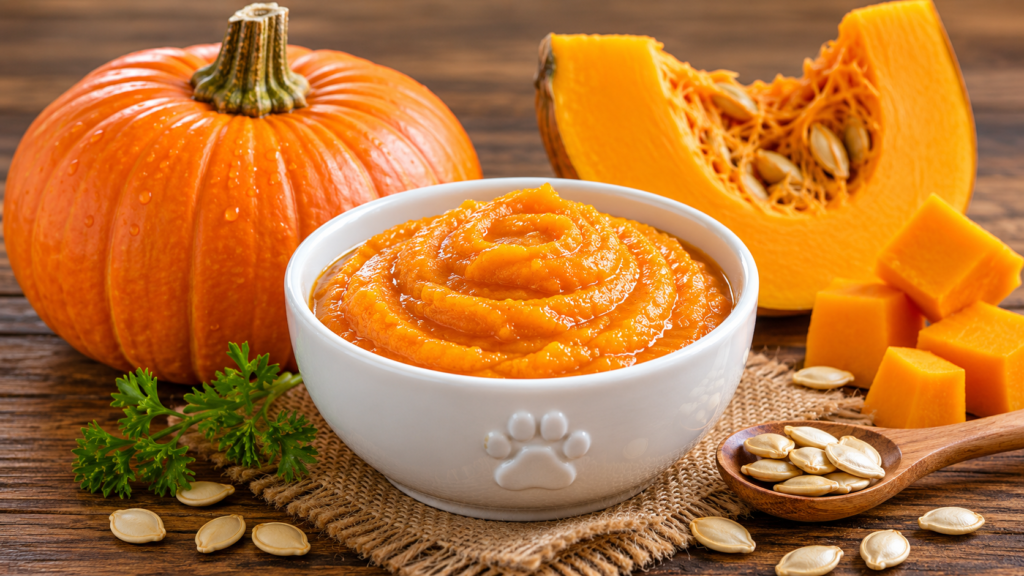
Pumpkin
Pumpkin is one of the most recognized fiber-rich ingredients for dogs.
It contains soluble fiber that may help support healthy digestion and stool consistency.
Sweet Potatoes
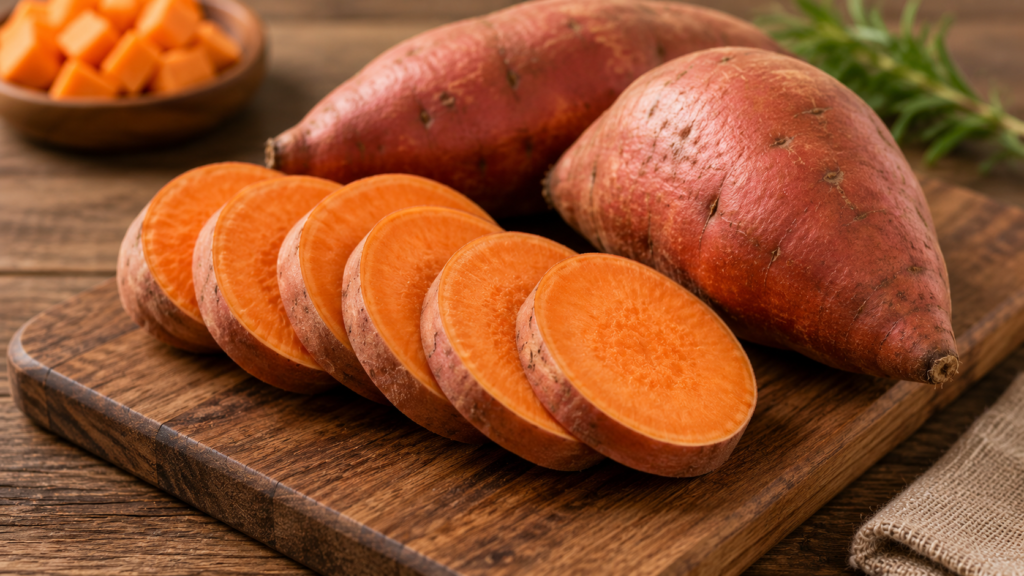
Sweet potatoes provide fiber along with vitamins and antioxidants.
They are also generally easy to digest when properly prepared.
Carrots
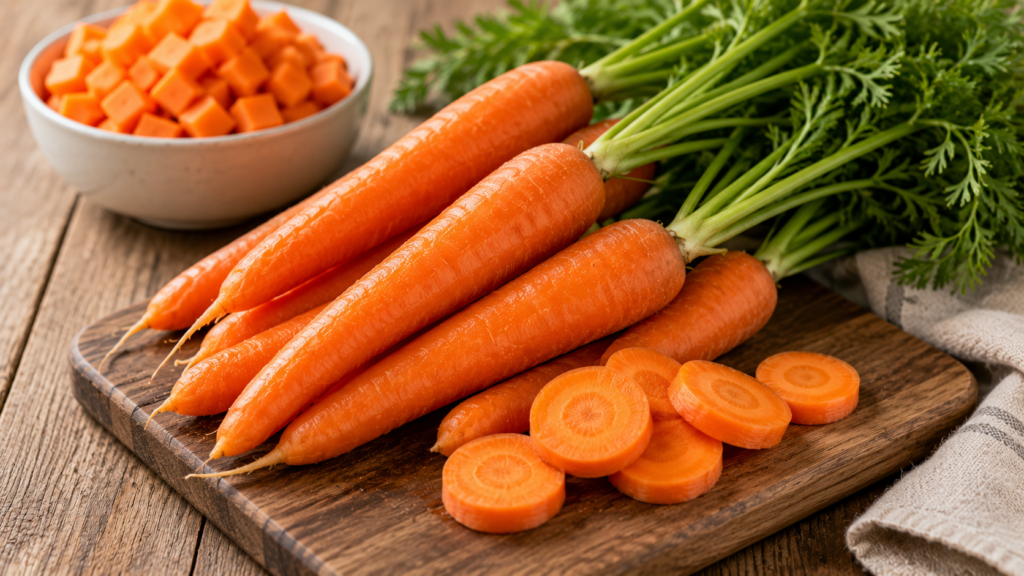
Carrots offer both soluble and insoluble fiber while providing beta-carotene, which supports overall health.
Beet Pulp
Beet pulp remains a common ingredient in many commercial puppy foods.
Veterinary nutritionists often use it because it supplies moderately fermentable fiber that supports digestive function.
Oats and Brown Rice
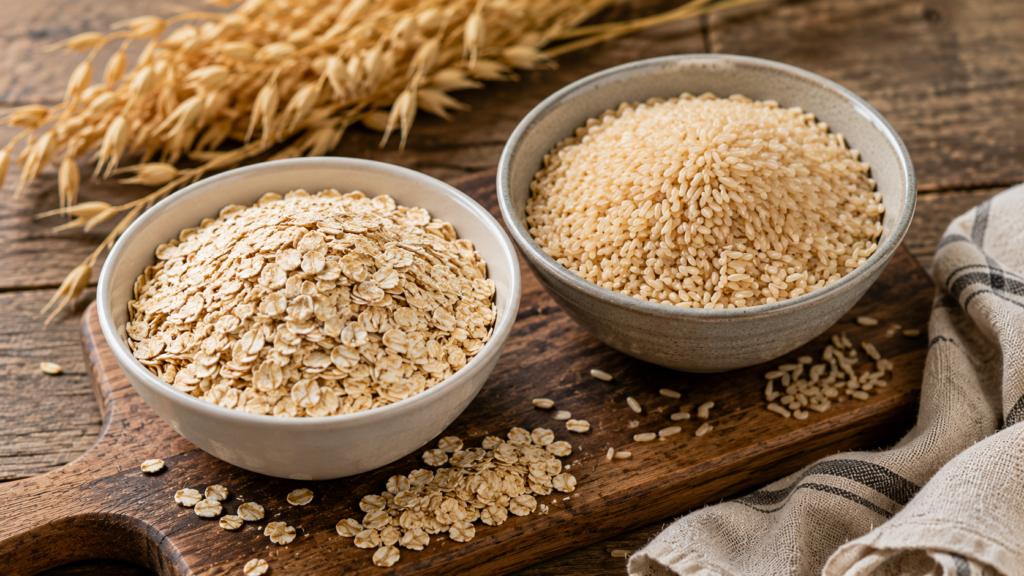
Whole grains such as oats and brown rice contribute fiber while also supplying energy for growing puppies.
Prebiotic Fibers
Ingredients like chicory root, inulin, and certain fiber blends can act as prebiotics.
Prebiotics help feed beneficial bacteria in the gut, supporting digestive health.
How Much Fiber Does a Puppy Need?
This is where many pet owners get confused.
There is no universal “perfect” fiber percentage that fits every puppy.
Pet food labels typically display crude fiber, but crude fiber measurements do not capture all forms of dietary fiber. Experts note that crude fiber reflects only part of the total fiber content present in food.
Many commercial puppy foods contain moderate fiber levels, often around 3% to 5% crude fiber on the label. Excessive fiber can sometimes interfere with nutrient absorption if it replaces more important nutrients needed for growth.
For growing puppies, balance matters more than simply choosing the highest fiber number.
How to Choose the Best High Fiber Puppy Food
The pet food aisle can feel like a marketing competition.
Every bag claims to be premium, natural, holistic, or veterinarian-approved.
Instead of focusing on advertising language, look for these factors.
Choose an AAFCO-Compliant Puppy Formula
The label should state that the food is complete and balanced for growth or all life stages according to AAFCO nutritional standards.
Check Protein Levels
Puppies require higher protein levels than adult dogs because they are actively growing.
AAFCO growth standards require higher protein levels for puppy diets than maintenance diets for adult dogs.
Review Ingredient Quality
Look for recognizable ingredients such as:
- Chicken
- Turkey
- Salmon
- Sweet potatoes
- Pumpkin
- Brown rice
- Oats
Avoid Extreme Fiber Levels
Some owners assume more fiber automatically means better digestion.
That is not always true.
Research on commercial puppy diets has shown that excessively high fiber levels can create nutritional imbalances in certain formulations.
Consider Your Puppy’s Breed Size
Large-breed puppies have different nutritional requirements than small-breed puppies.
Growth rate, calcium balance, and energy needs all play important roles.
Wet vs Dry High Fiber Puppy Food
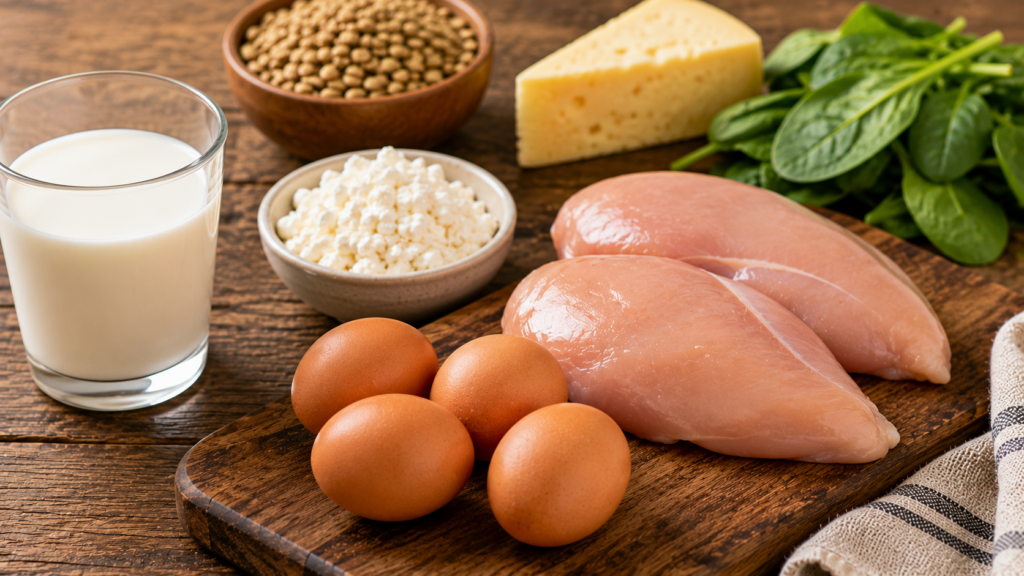
Both wet and dry puppy foods can provide fiber.
Dry food remains the most common choice because it is convenient, cost-effective, and easy to store. Wet food contains higher moisture levels and may be useful for puppies that need additional hydration or have picky eating habits.
Many pet owners combine wet and dry food to create variety while maintaining balanced nutrition.
The best option depends on your puppy’s preferences, health status, and your veterinarian’s recommendations.
Common Mistakes Pet Owners Make
Switching Foods Too Quickly
A sudden food change can upset your puppy’s stomach.
Introduce new food gradually over several days.
Ignoring Ingredient Quality
A high fiber percentage alone does not guarantee a better food.
The overall nutritional profile matters far more.
Following Internet Trends
Not every viral dog nutrition tip comes from a reliable source.
Stick with evidence-based information from veterinarians, veterinary nutritionists, and established pet nutrition organizations.
Forgetting Water Intake
Fiber works best when puppies stay properly hydrated.
Always provide access to fresh, clean water.
Final Thoughts
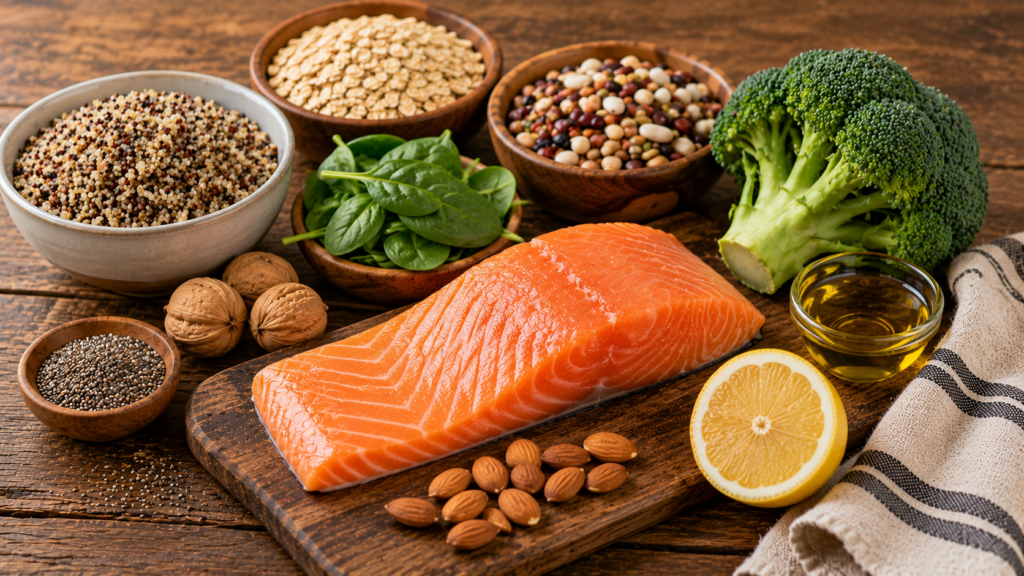
High fiber puppy food can play an important role in digestive health, stool quality, and gut support when used correctly.
The goal is not to find the food with the highest fiber content. The goal is to find a balanced puppy formula that delivers quality protein, healthy fats, essential nutrients, and appropriate fiber levels.
Look for foods formulated specifically for growth, verify AAFCO nutritional adequacy statements, and pay attention to ingredient quality rather than marketing buzzwords.
Most importantly, remember that every puppy is unique. What works perfectly for one energetic Labrador may not work as well for a tiny Chihuahua with a sensitive stomach.
When in doubt, your veterinarian remains the best source of personalized nutrition advice.
A healthy puppy starts with smart nutrition choices today—and your future adult dog will thank you for it.