Bringing home a puppy feels exciting, heartwarming, and sometimes a little overwhelming. One moment you’re admiring those tiny paws, and the next you’re cleaning up a mystery puddle on your living room floor.
If you’re a first-time dog owner, don’t worry. Every experienced dog parent started exactly where you are now.
The good news? Taking care of a puppy becomes much easier when you understand the basics. With the right routine, proper nutrition, training, and veterinary care, you can help your puppy grow into a healthy, confident, and well-behaved dog.
In this beginner-friendly guide, you’ll learn everything you need to know about puppy care without the confusing jargon.
Prepare Your Home Before Your Puppy Arrives
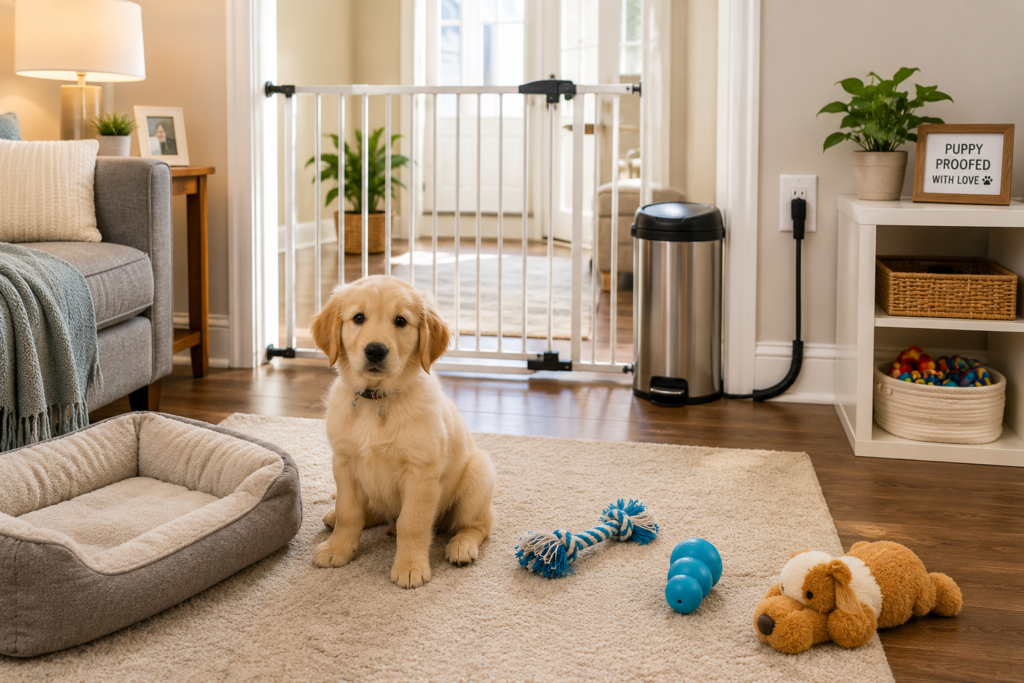
Puppies are naturally curious. They explore the world with their noses, paws, and unfortunately, their teeth.
Before bringing your puppy home, puppy-proof your living space by:
Removing electrical cords from reach
Storing cleaning products safely
Keeping small objects off the floor
Blocking dangerous areas with gates
Securing trash cans
Think of your puppy as a furry toddler with unlimited energy and zero understanding of consequences.
Creating a safe environment reduces accidents and helps your puppy adjust faster.
Choose the Right Puppy Supplies
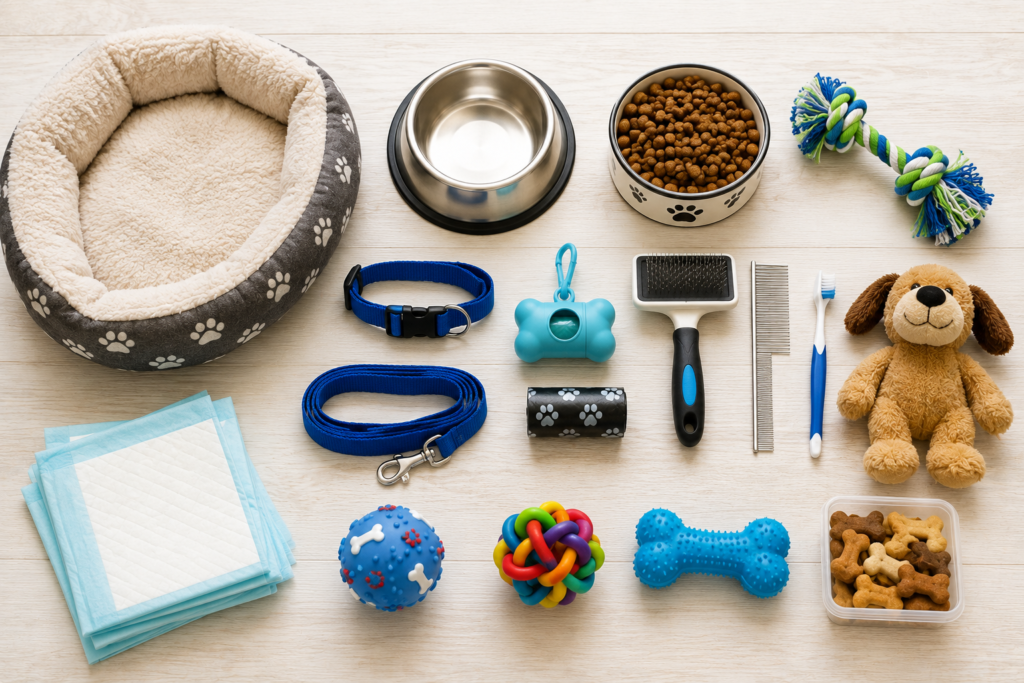
Having the right supplies makes daily care much easier.
Here are the essentials:
Food and water bowls
High-quality puppy food
Comfortable dog bed
Crate for training
Collar and leash
Puppy-safe chew toys
Grooming brush
Poop bags
Puppy training treats
Avoid buying dozens of toys immediately. Most puppies end up choosing a random sock as their favorite possession anyway.
Feed Your Puppy a Balanced Diet
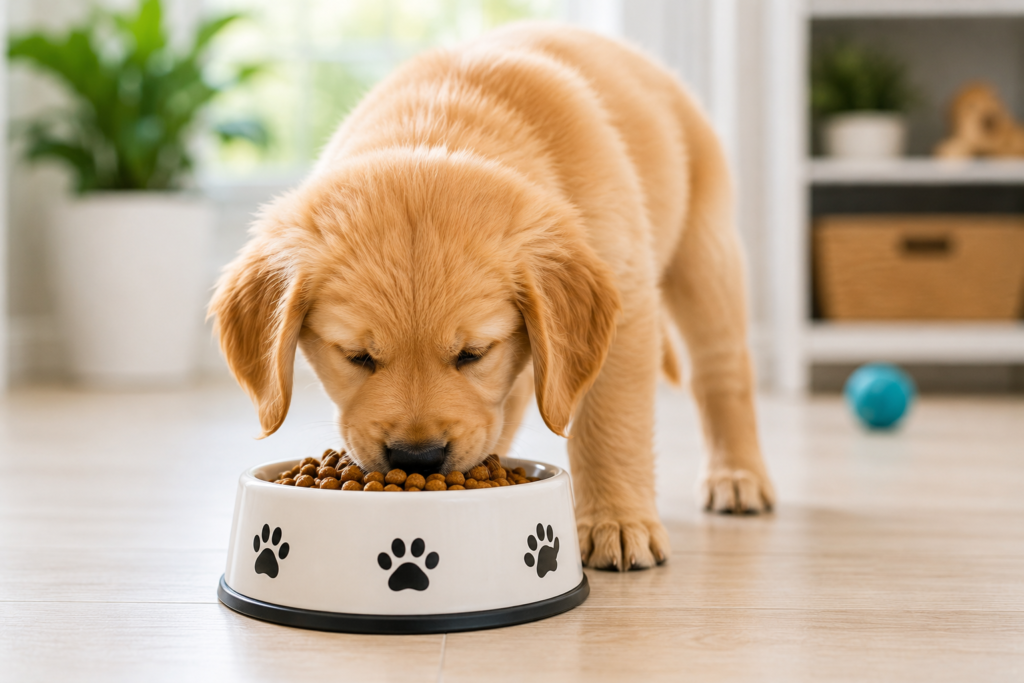
Nutrition plays a major role in your puppy’s growth and development.
Veterinarians recommend feeding food specifically formulated for puppies because it contains nutrients needed for healthy bones, muscles, and brain development.
Most puppies require multiple meals throughout the day.
A general feeding schedule looks like this:
8–12 Weeks Old
Four meals per day
3–6 Months Old
Three meals per day
6–12 Months Old
Two meals per day
Always follow feeding guidelines provided by your veterinarian or the food manufacturer.
Fresh water should remain available throughout the day.
Poor nutrition during puppyhood can affect growth, energy levels, and long-term health.
Schedule Your First Vet Visit
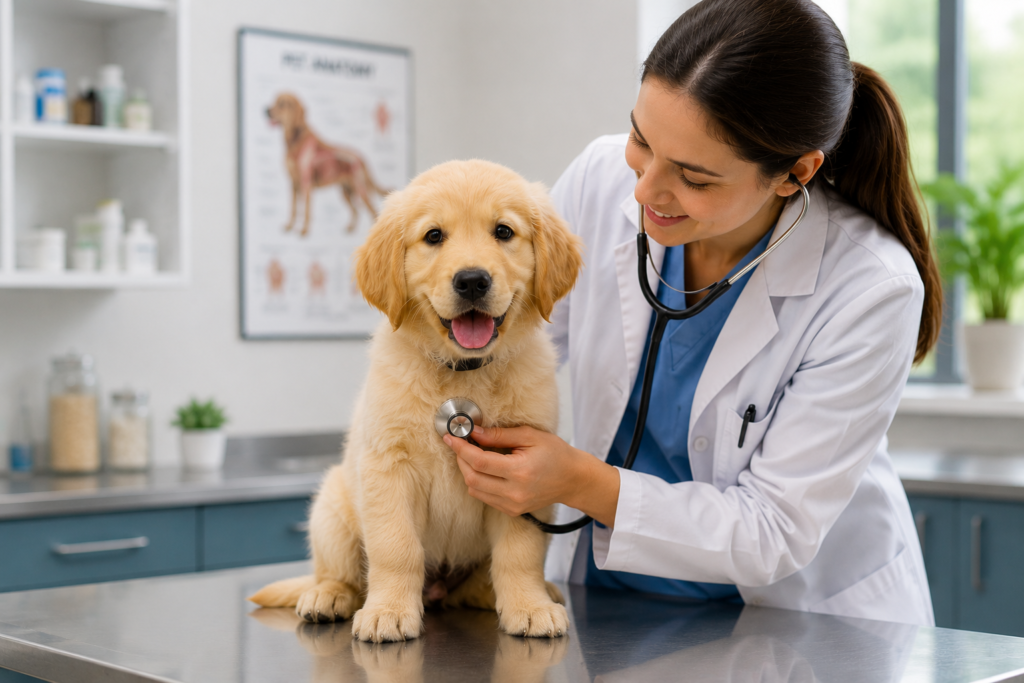
One of the most important steps after bringing your puppy home is scheduling a veterinary appointment.
Your veterinarian will:
Perform a health examination
Check for parasites
Discuss vaccination schedules
Recommend flea and tick prevention
Provide feeding guidance
According to the American Kennel Club (AKC), puppies need a series of vaccinations during their first year to protect against serious diseases.
Regular vet visits help identify health concerns early and keep your puppy protected.
Start Potty Training Immediately
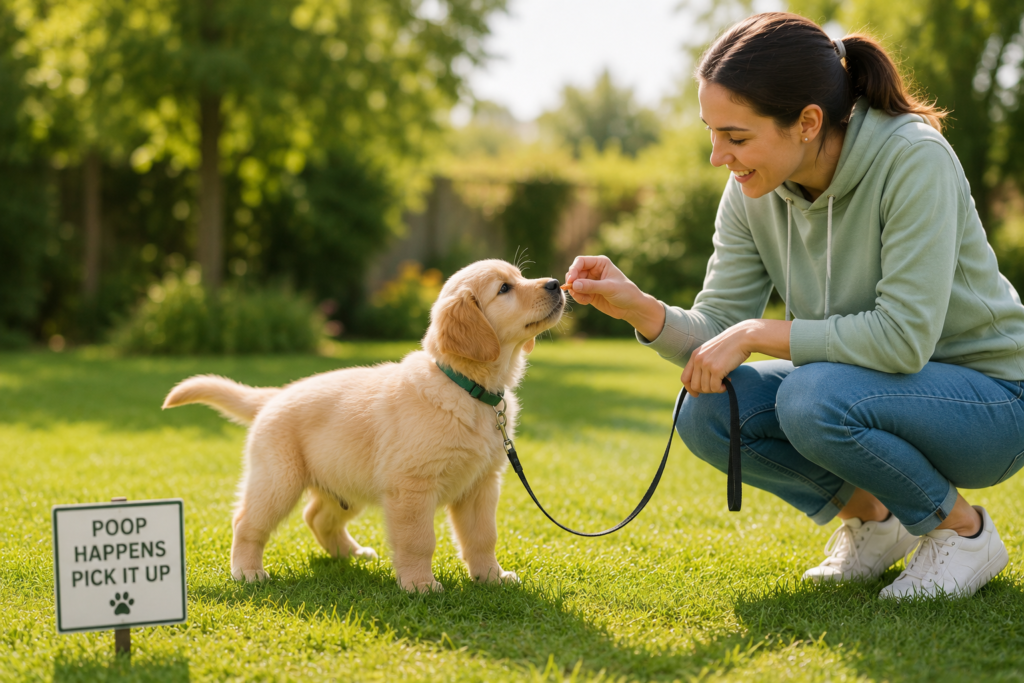
Many new owners wait too long to begin house training.
The best time to start is the day your puppy arrives home.
Consistency matters more than perfection.
Take your puppy outside:
After waking up
After meals
After play sessions
Before bedtime
Every one to two hours during the day
Reward successful potty trips with praise and treats.
The AKC and professional trainers recommend maintaining a consistent routine because puppies learn faster when daily schedules remain predictable.
Accidents will happen.
When they do, clean the area thoroughly and move on. Punishment usually creates confusion instead of better behavior.
Create a Daily Routine
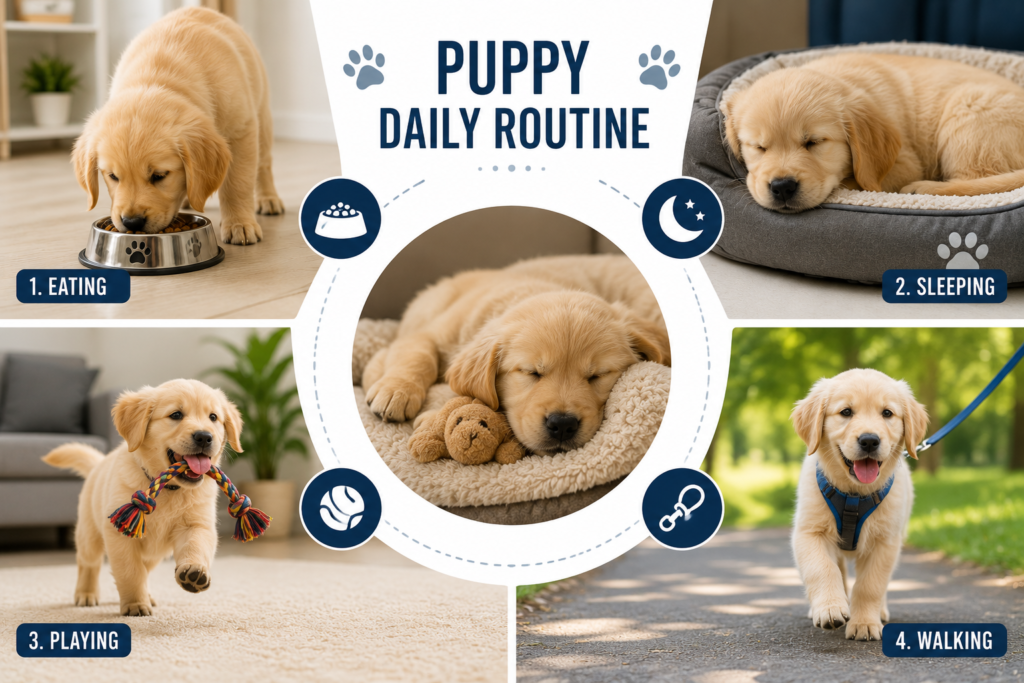
Dogs thrive on structure.
A predictable schedule helps your puppy feel secure and reduces unwanted behaviors.
A basic puppy routine may include:
Morning
Potty break
Breakfast
Short walk
Playtime
Afternoon
Nap
Training session
Potty breaks
Evening
Dinner
Family interaction
Short exercise
Final potty trip
The AKC notes that routines help puppies understand expectations and develop positive habits early.
Begin Basic Training Early

Many people assume training should start when puppies become older.
In reality, training can begin as early as eight weeks old using positive reinforcement methods.
Focus on simple commands such as:
Sit
Stay
Come
Leave it
Down
Keep training sessions short.
Five to ten minutes works well for most young puppies.
Use treats, praise, and toys to reward good behavior.
Avoid yelling or harsh corrections. Positive reinforcement builds trust and produces better long-term results.
Socialize Your Puppy Safely

Socialization helps puppies become confident adults.
A well-socialized dog handles new people, sounds, environments, and situations without excessive fear.
According to the AKC and veterinary behavior experts, the first three months of life represent a critical socialization period.
Introduce your puppy to:
Different people
Friendly vaccinated dogs
Various sounds
Car rides
New environments
Different surfaces
Keep experiences positive and gradual.
Socialization isn’t about overwhelming your puppy with everything at once.
It’s about teaching them that the world is a safe place.
Crate Training Can Help

Some people worry that crate training feels unfair.
When used correctly, a crate becomes a safe and comfortable space for your puppy.
Professional trainers often recommend crate training because it supports:
House training
Safety
Independence
Better sleep habits
Introduce the crate gradually.
Add soft bedding and treats to create positive associations.
Never use the crate as punishment.
A crate should feel like a bedroom, not a jail cell.
Manage Puppy Biting and Chewing

Puppies explore through chewing.
Teething also increases their desire to bite objects.
Provide plenty of safe chew toys and redirect unwanted chewing immediately.
If your puppy bites your hands during play:
Stop the interaction
Redirect attention to a toy
Reward appropriate play
Training experts recommend teaching bite inhibition early to prevent future behavioral problems.
Remember, your puppy isn’t trying to be naughty.
They’re simply learning how to interact with the world.
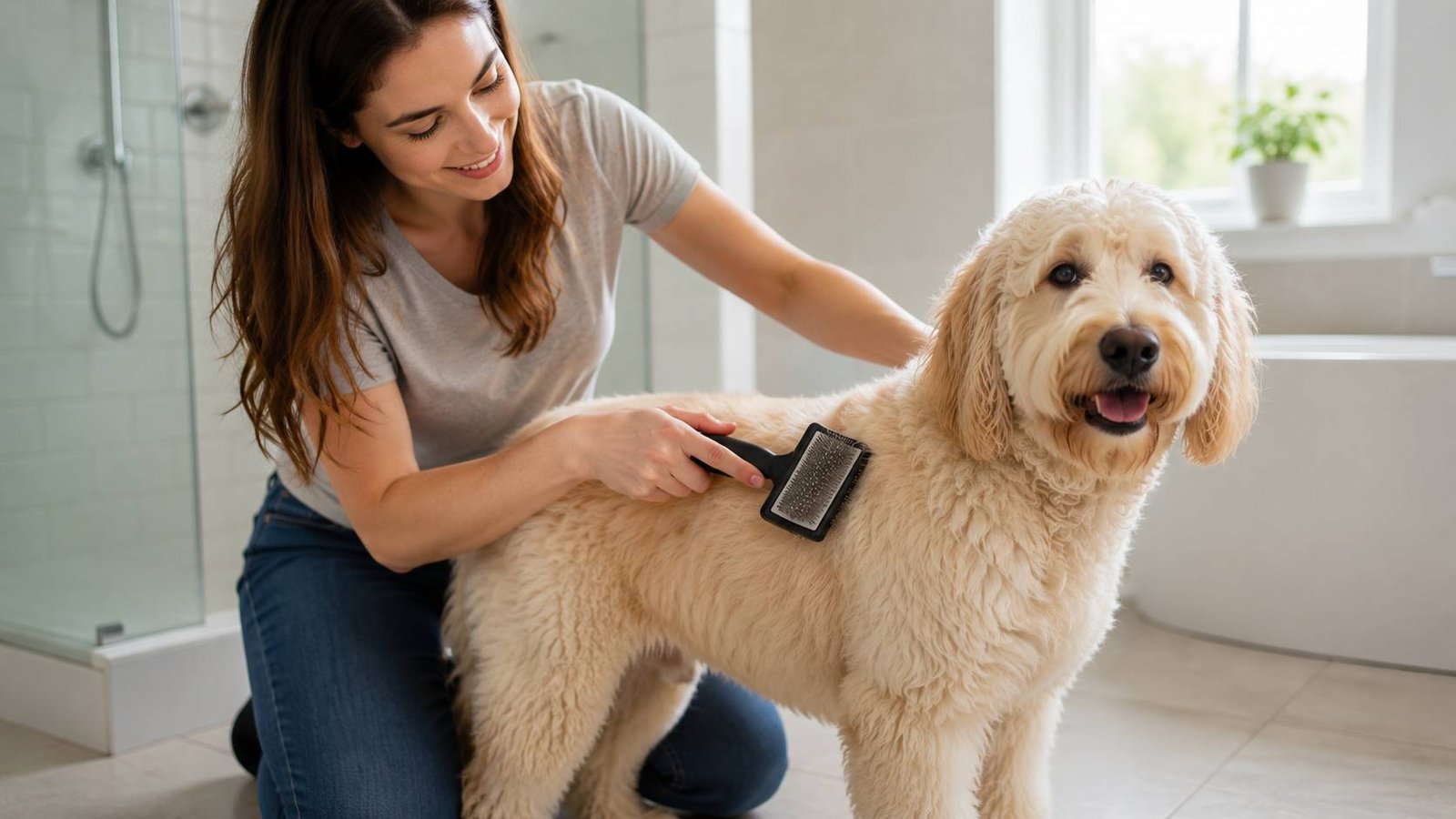
Groom Your Puppy Regularly

Regular grooming supports overall health and comfort.
Even short-haired breeds benefit from routine grooming.
Important grooming tasks include:
Brushing the coat
Cleaning ears
Trimming nails
Brushing teeth
Checking skin for issues
The AKC also recommends monitoring your puppy’s eyes, ears, skin, and paws regularly for signs of illness or injury.
Start grooming early so your puppy becomes comfortable with handling.
Future grooming appointments become much easier when puppies learn these routines young.
Make Sleep a Priority

Many beginners worry when their puppy seems to sleep all day.
That’s completely normal.
Young puppies often sleep between 18 and 20 hours daily.
Sleep supports:
Brain development
Physical growth
Learning
Immune system function
Provide a quiet, comfortable sleeping area and avoid interrupting naps unnecessarily.
A tired puppy often becomes cranky, hyperactive, and difficult to train.
Sound familiar? Humans aren’t much different.
Watch for Signs of Illness

Puppies can become sick quickly, so early detection matters.
Contact your veterinarian if you notice:
Vomiting
Diarrhea
Loss of appetite
Extreme lethargy
Persistent coughing
Breathing difficulties
Eye or nose discharge
Routine health monitoring helps catch problems before they become serious.
Trust your instincts.
If something feels unusual, seek professional advice.
Final Thoughts
Learning how to take care of a puppy for beginners doesn’t require perfection.
It requires consistency, patience, and a willingness to learn.
Focus on the essentials:
Proper nutrition
Veterinary care
Potty training
Socialization
Positive training
Daily routines
Plenty of love and attention
Your puppy won’t remember the expensive bed, the fancy accessories, or the designer leash.
They will remember how safe, loved, and cared for they felt in your home.
Invest time in building that bond now, and you’ll enjoy years of companionship from a healthy, happy dog.
Sources
American Kennel Club (AKC) – Puppy Vaccination Guide
American Kennel Club (AKC) – Puppy Training Timeline
American Kennel Club (AKC) – Developing a Routine for Your New Puppy
American Veterinary Society of Animal Behavior (AVSAB) Socialization Recommendations
AKC Puppy Care Resources and Health Guides